Zara
Live Show
By Chance → On Purpose: A Data-Curated Fashion Show Using Excess Inventory
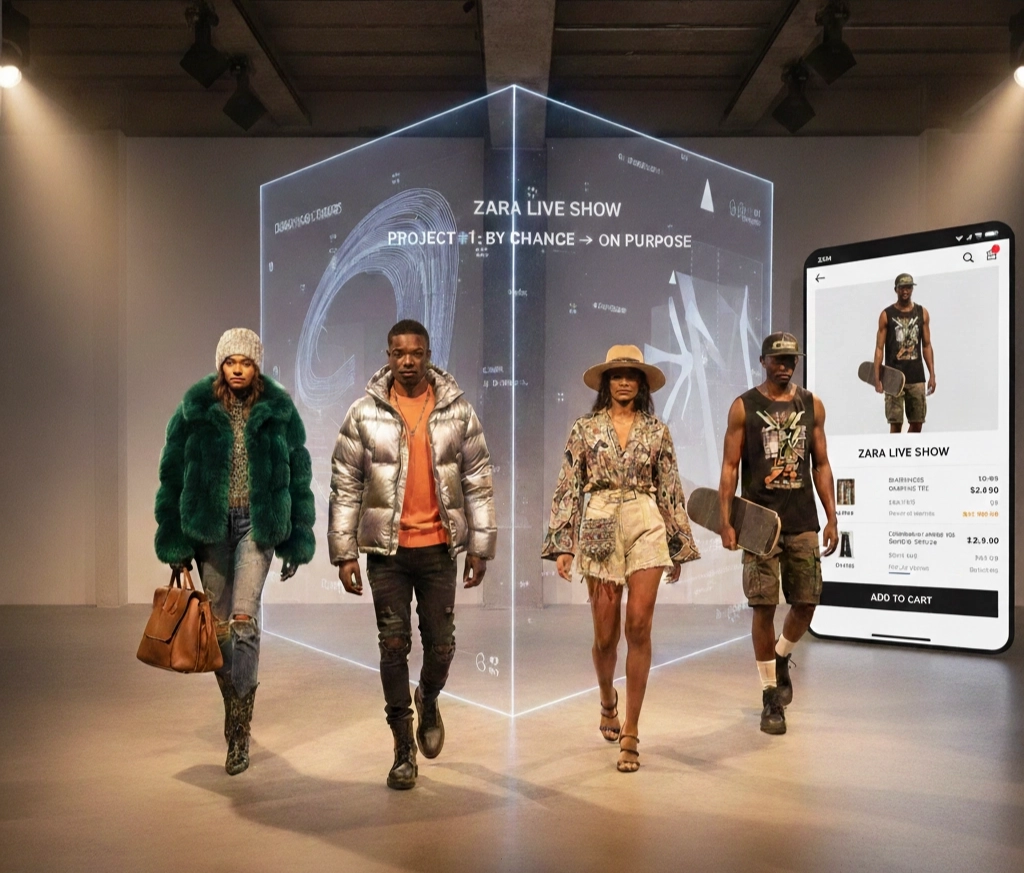
Data-Driven Live Curation
Real-Time Inventory Intelligence
- Items with excess stock, especially difficult designs or hard-to-style pieces, are selected in real time using the MIT distributed optimization model.
- Live model styling converts latent demand for high-inventory items into active purchase intent. Strategic exposure, not clearance.
The Small Live Show
Zara's Signature Refinement
- Not influencer casualness. Emerging models deliver professional walks and editorial poses, maintaining Zara's designer-adjacent sensibility.
- Broadcast simultaneously in-store and on the Zara app, the show turns a transaction into a premium experience worth attending.
SINT-Powered Real-Time Orders
Live Purchase, Zero Friction
- Viewers order items directly through the Zara app while watching. No delay, no cart abandonment.
- The SINT system deducts sold units in real time across online and in-store inventory, preventing sales loss and defending margin throughout the live event.
ESG: Local Impact & Circularity
From Waste Risk to Brand Story
- Zero inventory disposal: data gives value to clothes at risk of being discarded, creating a genuine circularity loop that directly addresses Zara's most persistent environmental criticism.
- Emerging model ecosystem: providing new talent with paid exposure reduces marketing costs while contributing to the local fashion economy.
By Chance
to On Purpose
Data confirms it: Zara has achieved an overwhelming edge in the world of numbers. High capital efficiency proves that invested assets convert to value faster than any competitor. The next evolution demands something numbers alone can't deliver: the recovery of environmental accountability and the quality of the lived store experience, long obscured by operational success.
Zara Live Show deploys Zara's core engines, the MIT algorithm and SINT system, as an artistic showcase giving surplus inventory a second life. This isn't inventory management. It's a strategy that delivers data-optimized styling and the fashion show as premium experience, proving that the most efficient operator in fashion can also be its most compelling one.